
It began in one narrow waterway, the Strait of Hormuz. But within weeks, the tensions surrounding this strategic passage had escalated into a much larger geopolitical crisis affecting not just the Middle East, but markets and economies across Asia and the world.
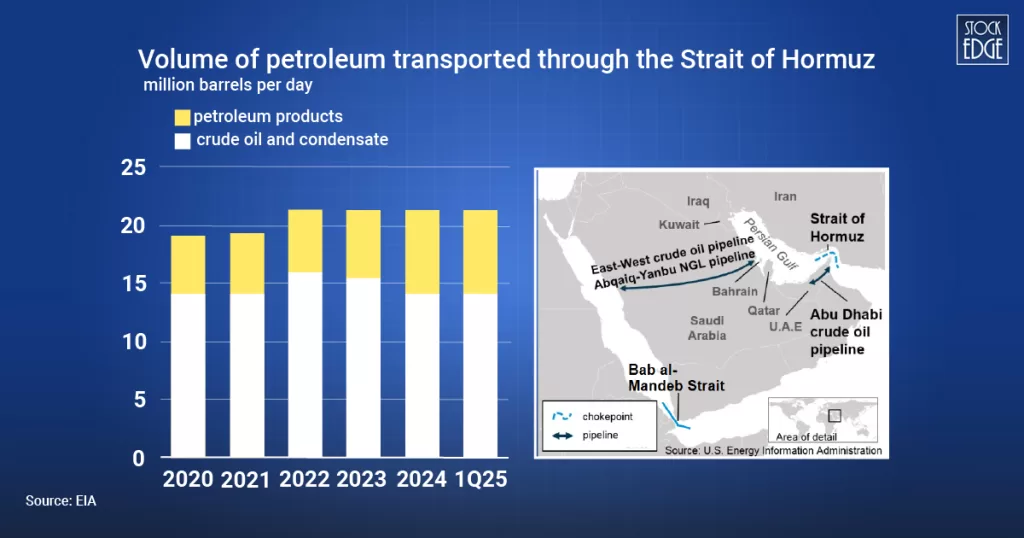
The Strait of Hormuz is one of the most critical energy chokepoints globally, with a significant portion of the world’s oil shipments passing through it every day. Any disruption here immediately sends shockwaves through global energy markets.
Tensions in the Middle East have resurfaced in a major way during 2025–2026. As the situation evolves, the ripple effects are being felt across global financial markets, energy prices, and geopolitical alliances.
Read: Top 3 Geopolitical Risks for the Stock Market
For India, developments in the Middle East are particularly important. The country depends heavily on the region for crude oil imports, maintains strong trade relationships with Gulf nations, and has a large Indian workforce living and working there. Any instability in the region can therefore have direct economic implications for India.
In this blog, we will examine the current geopolitical situation as of March 2026 and analyze how it can disrupt further in an escalation of war and its continuity.
What Is Happening in the Israel-Iran War?
The hostility between Israel and Iran did not emerge overnight. Its roots go back more than four decades, to the 1979 Iranian Revolution that transformed Iran into an Islamic Republic and fundamentally changed its relationship with Israel.
Since then, the two countries have remained locked in a long-running shadow conflict shaped by ideology, regional influence, and nuclear ambitions. Iran has never recognised Israel as a legitimate state and has supported several armed groups across the region that oppose Israel. These include Hamas in Gaza, Hezbollah in Lebanon, and the Houthis in Yemen, groups often described collectively as part of Iran’s “Axis of Resistance.”
Israel, on the other hand, sees Iran’s nuclear programme as a direct security threat. Over the years, it has reportedly carried out covert operations aimed at slowing or disrupting Iran’s nuclear progress, including cyber attacks, intelligence operations, and targeted strikes.
| Conflict | Year | Crude Oil Impact |
| Yom Kippur War | 1973 | Prices spiked nearly 350% in under 6 months. The price moved from approximately $3 per barrel to nearly $12 per barrel. |
| Gulf War | 1990 | Oil prices jumped from roughly $18 – $20 per barrel in July 1990 to over $40 by mid-October 1990 |
| Iraq War | 2003 | A massive surge in prices from around $25 per barrel to over $140 by 2008. |
| Israel-Iran War | 2026 | Brent crude, the global oil benchmark, rose sharply from $72.29 per barrel to $104.61 during the third week of the war. |
Why Does a Crisis in the Middle East Possibly Affect Indian Markets?
A geopolitical crisis in the Middle East can have significant implications for Indian financial markets. The primary reason is India’s heavy dependence on imported crude oil and the region’s importance in global energy supply chains. Any escalation in the region tends to push oil prices higher, increase India’s import bill, and create inflationary pressures within the economy. This combination often leads to volatility in equity markets and shifts in investor sentiment.
Below are the key channels through which a Middle East crisis affects Indian markets:
1. High Dependence on Oil Imports
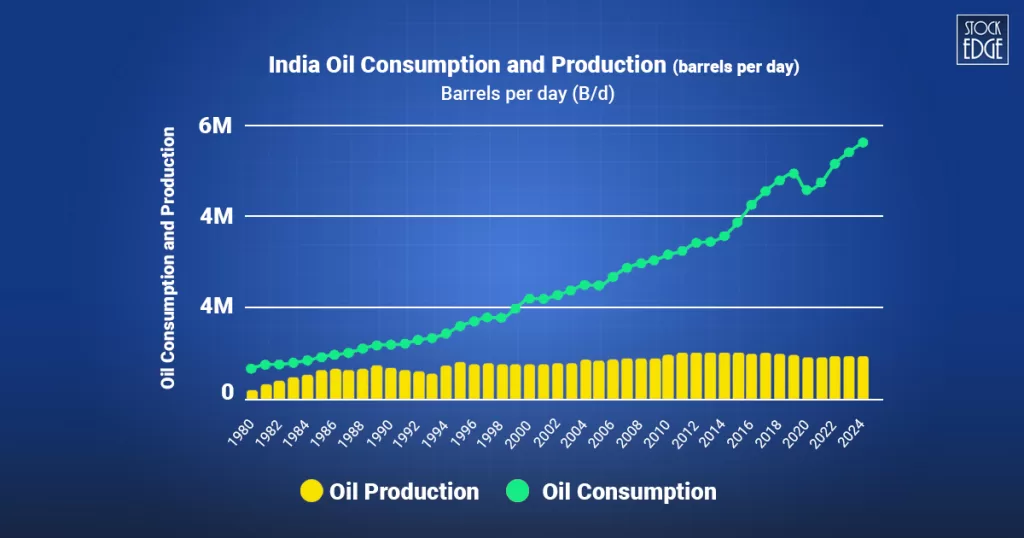
India imports more than 85% of its crude oil requirements. As a result, any disruption in oil production or transportation in the Middle East can quickly push global crude prices higher, increasing India’s energy import costs.
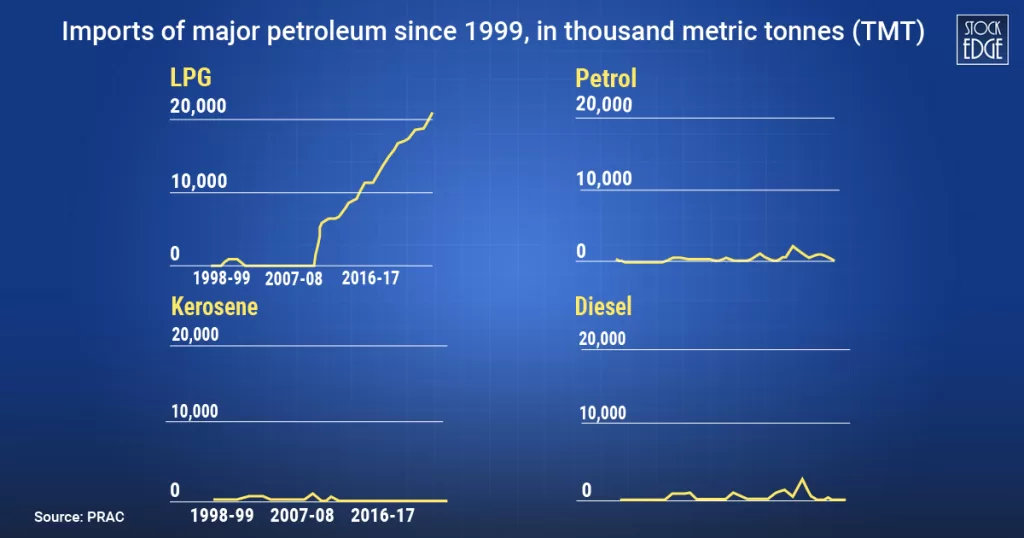
According to data published by the Petroleum Planning and Analysis Cell (PPAC), which falls under the Union Ministry of Petroleum and Natural Gas, India has been a net importer of crude oil and LPG since 1999.
2. Impact on Inflation
Higher crude oil prices raise input costs across several sectors such as chemicals, paints, tyres, logistics, and transportation. Rising fuel costs eventually filter through the economy, putting upward pressure on inflation.
3. Pressure on Corporate Earnings and Market Sentiment
Rising energy and logistics costs can reduce profitability for many Indian companies. Sectors such as aviation, oil marketing companies, and manufacturing are particularly sensitive to higher fuel prices. Concerns over earnings often lead to cautious investor sentiment and increased market volatility.
4. Rupee Depreciation and FII Outflows
A higher oil import bill increases demand for U.S. dollars, which can put pressure on the Indian Rupee. During periods of geopolitical uncertainty, foreign institutional investors (FIIs) also tend to reduce exposure to emerging markets, leading to capital outflows.
Indian Sectors Impacted by the Israel-Iran War
The ongoing conflict between Israel, the US, and Iran (referred to as Operation Roaring Lion as of March 2026) has triggered a broad economic shock in India. The most severe impacts stem from disruptions at the Strait of Hormuz, a critical transit point for nearly 20% of global oil and a vast majority of India’s energy and fertilizer imports.
Energy and Oil Marketing Companies (OMCs)
This is the most severely hit sector due to India’s dependence on the Strait of Hormuz, which is effectively closed to commercial shipping. India imports more than 85% of its crude oil requirements, with a large portion historically transiting the Strait of Hormuz.
India’s daily crude consumption stands at approximately 55 lakh barrels. Through emergency procurement diversification, volumes secured currently exceed what would normally have arrived through the Strait during this period.
India now sources crude from ~40 countries, with 70% of imports now arriving via routes outside the Strait of Hormuz, up from 55% earlier.
While upstream companies that produce crude oil may benefit from higher prices. ONGC, Oil India, and Vedanta’s oil operations are relative beneficiaries of higher crude realizations, as elevated prices directly boost their revenue per barrel.
Reliance Industries, with its integrated upstream-downstream model, is more resilient than pure-play OMCs, as upstream gains partially offset refining margin pressure.
However, oil marketing companies could face margin pressure if fuel prices are not fully passed on to consumers.
Aviation Sector
Airlines are among the first industries to feel the impact of rising crude oil prices. Aviation turbine fuel (ATF) is one of the largest cost components for airlines, typically accounting for around 35–40% of total operating expenses.
According to data for January 2026, ATF consumption stood at 828 thousand metric tonnes (TMT), compared with 784 TMT in January 2025, reflecting a 5.5% year-on-year increase. This growth indicates the continued recovery and expansion of air travel in India.
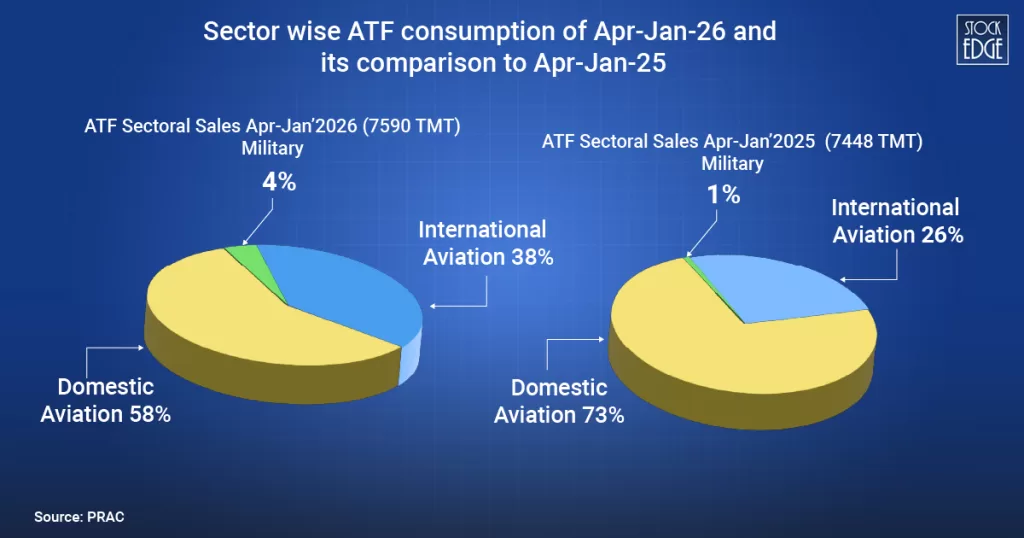
International aviation has also become a larger contributor to India’s ATF demand. It now accounts for around 38% of total ATF consumption, up from 26% a year earlier. As a result, any disruption in Middle Eastern airspace can affect a larger portion of international flights originating from India.
In addition, airspace restrictions or route diversions in the Middle East may lead to longer flight paths and higher fuel consumption. With international aviation now comprising 38% of ATF consumption, up from 26% a year ago, the shutdown of Middle East airspace hits a much larger share of India’s flying economy than it would have even 12 months prior. The India-UAE corridor, one of the busiest international routes by passenger volume, sits directly inside the conflict zone.
So airlines face a triple compression, i.e, surging ATF costs, lost international revenue, and longer rerouted flight paths that burn more fuel per trip.
Automobiles Sector
The Israel-Iran conflict does not directly disrupt automobile production in India, but it can affect the sector through multiple economic channels. Rising fuel prices, higher raw material costs, logistics expenses, and weakening consumer sentiment can together create pressure on the industry.
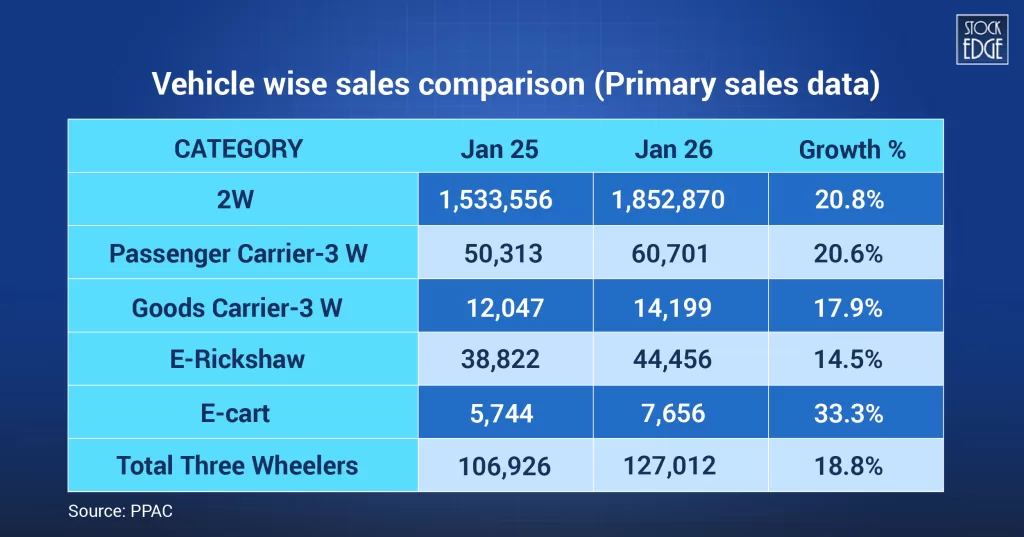
If crude oil prices remain high, petrol and diesel prices may rise, which could reduce demand for two-wheelers, entry-level cars, and commercial vehicles, as these segments are more sensitive to fuel costs. Higher fuel prices can also increase logistics and transportation expenses across the automobile supply chain.
The tyre industry depends heavily on synthetic rubber and carbon black, both of which are derived from crude oil. When crude prices rise, the cost of these raw materials increases, putting pressure on manufacturers’ margins.
Defence Sector
Geopolitical tensions often draw attention to the importance of defence preparedness. In the short term, Indian defence companies could face minor supply chain disruptions, as the United States and Israel supply several critical defence systems and components to India.
However, rising global tensions generally strengthen the case for higher defence spending and faster procurement. India has already been increasing its defence budget while promoting domestic manufacturing through the “Make in India” and indigenisation initiatives. This trend could accelerate if geopolitical risks remain elevated.
As a result, local defence manufacturers may see stronger long-term opportunities, particularly in areas such as electronic warfare systems, missiles, combat drones, and ammunition.
Chemical Sector
Many chemical and petrochemical products are derived from crude oil or natural gas. If crude prices remain elevated, production costs rise across industries such as paints, plastics, packaging, and specialty chemicals.
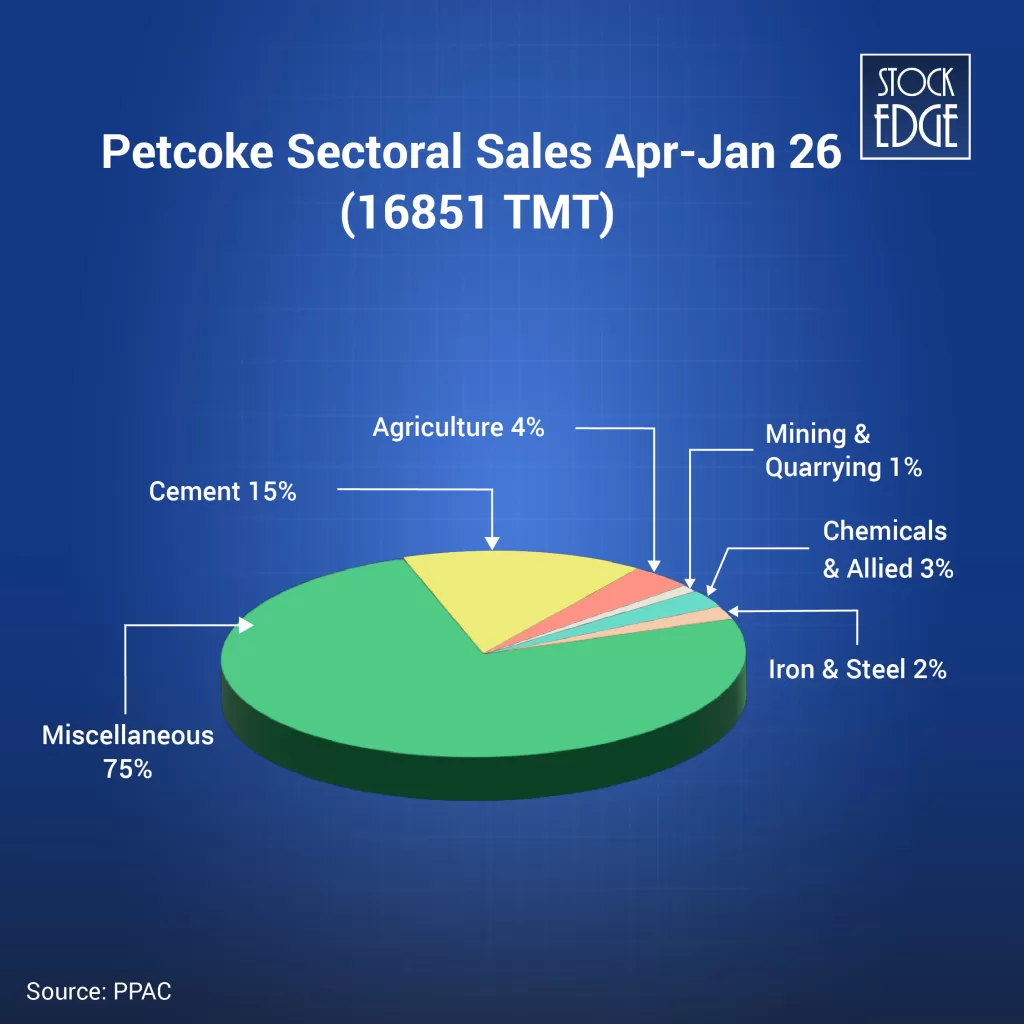
Petroleum coke (petcoke) plays a relatively modest but notable role in the chemical sector, accounting for around 3% of total petcoke sales (Apr–Jan ’26), primarily within the Chemicals & Allied segment. While this share is small compared to Miscellaneous or Cement end-users, petcoke serves as a key fuel and carbon source in the production of specialty chemicals, calcium carbide, and titanium dioxide. Sustained elevation in crude prices, which drives petcoke availability and pricing, can squeeze margins for chemical manufacturers that rely on it as a cost-effective energy substitute.
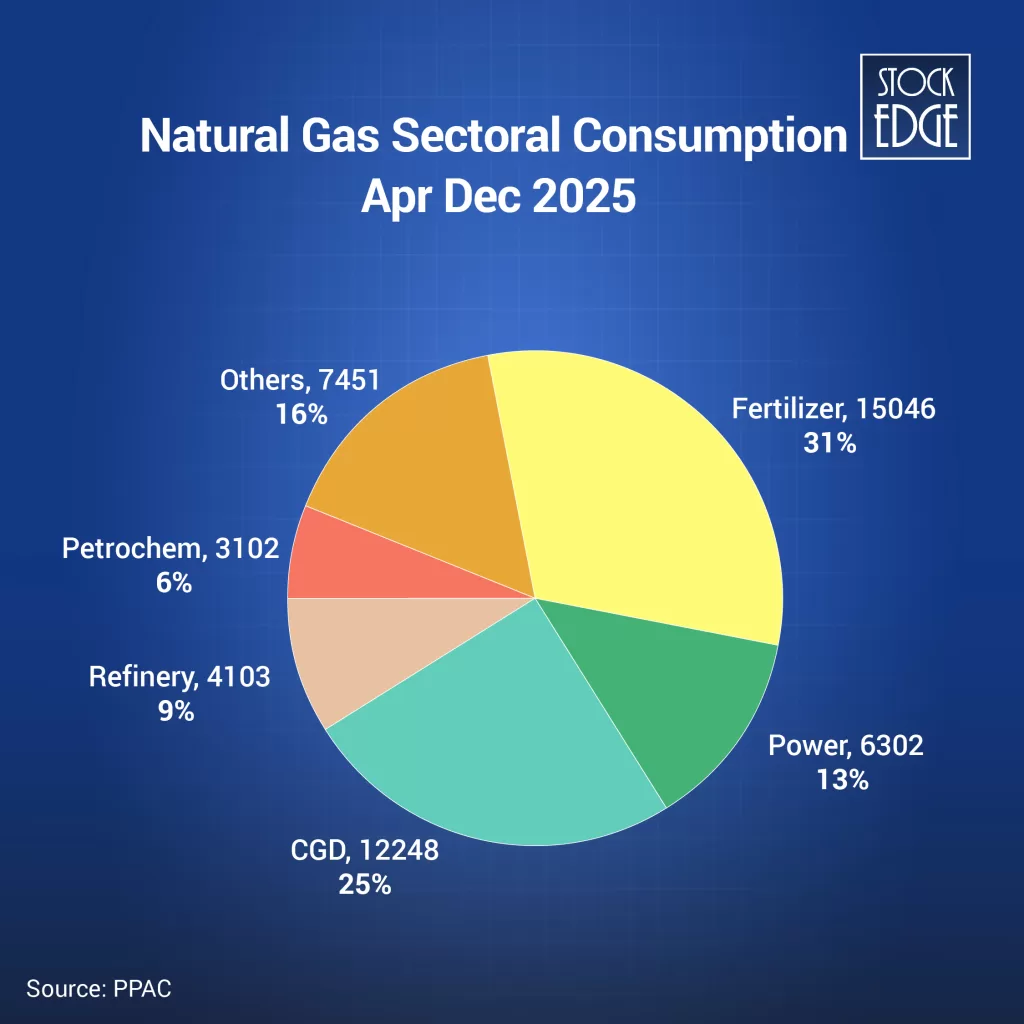
Natural gas, by contrast, is far more deeply embedded in the chemical value chain. Fertilizer production alone consumed 31% of total natural gas (Apr–Dec 2025), reflecting its role as the primary feedstock for ammonia and urea synthesis. The petrochemical segment consumed an additional 6%, supporting the manufacture of ethylene, propylene, and other building-block chemicals. Any supply tightening or price surge in natural gas directly inflates input costs across agrochemicals, polymers, and synthetic intermediates.
What You Should Watch Now?
The Israel-Iran conflict highlights how geopolitical tensions can quickly ripple through global energy markets and financial systems. For India, the biggest risk arises from higher crude oil prices and potential disruptions to energy supply routes such as the Strait of Hormuz.
For investors, the key takeaway is that geopolitical shocks tend to create short-term volatility but not always long-term structural damage to the Indian economy. Monitoring oil prices, policy responses, and global capital flows will remain critical in assessing how the situation evolves.
In uncertain periods like these, maintaining a diversified portfolio, focusing on companies with strong balance sheets, and keeping a long-term perspective can help investors navigate market turbulence more effectively.
Frequently Asked Questions (FAQs)
1. Could the Israel-Iran War create investment opportunities?
Yes, geopolitical tensions can create selective investment opportunities. For example, higher oil prices may benefit upstream energy companies that produce crude oil, while defence companies may gain from increased military spending and procurement.
2. How do geopolitical conflicts influence global financial markets?
Geopolitical conflicts create uncertainty, which often leads to volatility in global financial markets. Investors typically shift capital toward safer assets, oil and commodity prices may surge due to supply concerns, and equity markets can experience sharp swings as foreign investors reduce risk exposure.