

Table of Contents
India’s aerospace industry is moving from buying aircraft abroad to building them and supplying their parts, and this guide maps the aerospace value chain from raw materials and components to engines, assembly, and MRO. It covers what is driving the shift, including record defence exports, a 2,056-aircraft order pipeline, and global supply chain diversification, along with the execution risks that come with it.
India’s aerospace industry is no longer just about buying aircraft and fighter jets from abroad. The bigger story is about who builds them, who supplies their components, and which aerospace companies in India stand to benefit as the country strengthens its aerospace manufacturing capabilities.
The numbers reflect this shift. In FY2025-26, India’s defence production reached a record ₹1.78 lakh crore, registering 15.6% year-on-year growth, while defence exports climbed to ₹38,424 crore. This growing momentum is opening up opportunities across the aerospace value chain, from aircraft manufacturing and engines to avionics, precision components, and advanced materials.
For investors, this makes aerospace stocks worth exploring. The opportunity is not limited to aerospace companies in India that manufacture complete aircraft; it also extends to the businesses supplying the technology and components that make them fly.
In this blog, we will see which aerospace companies in India are positioned across this value chain, what is driving their growth, and which listed aerospace stocks deserve a closer look.
What Is the Aerospace Value Chain?
The aerospace value chain covers the journey from designing an aircraft and sourcing raw materials to manufacturing components, assembling the aircraft and maintaining it throughout its operational life.
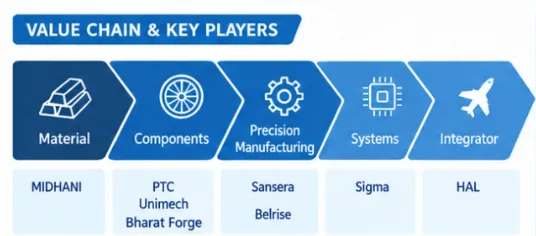
For investors, understanding this chain helps identify businesses in the aerospace sector that may benefit from the growth of commercial aviation. The aerospace value chain can be divided into five key stages:
- Raw Materials and Specialised Inputs: Aluminium, titanium, composites and specialised plastics help make aircraft lightweight and durable.
- Components and Systems Manufacturing: Materials are converted into fuselage sections, wings, landing gear, wiring harnesses and electronic systems by specialised suppliers.
- Engines and Major Aircraft Systems: Jet engines, avionics, flight controls and hydraulic systems require advanced technology, specialised expertise and certification, creating high entry barriers. CFM International and Pratt & Whitney are major commercial aircraft engine manufacturers.
- Aircraft Assembly and Integration: Manufacturers such as Airbus and Boeing assemble components, integrate systems, and conduct testing and certification to produce complete aircraft.
- Maintenance, Repair and Overhaul (MRO): Inspections, engine repairs, component replacements and upgrades generate recurring demand throughout an aircraft’s operational life.
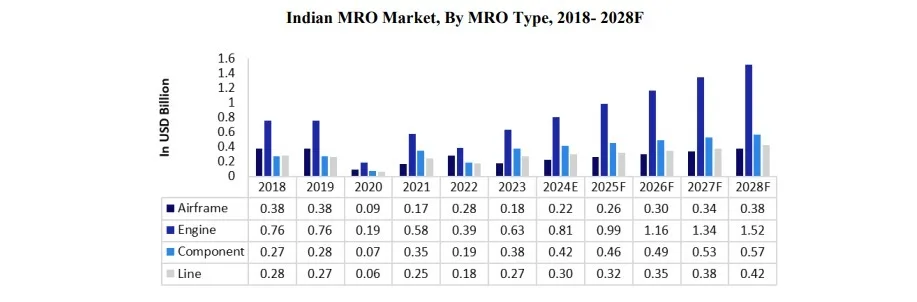
Engine MRO is India’s largest and fastest-growing MRO segment (US$0.63 billion in 2023 to US$1.52 billion by 2028).
India’s Defence & Aerospace Exports: Where They Stand and Where They Are Headed
India’s role in the global aerospace and defence market is evolving. The country is moving beyond domestic manufacturing towards supplying products, components and engineering capabilities to international markets. For investors, the interesting question is whether this growing global presence can translate into sustained business growth for aerospace companies in India.
Aerospace Industry in India: Where It Stands Today
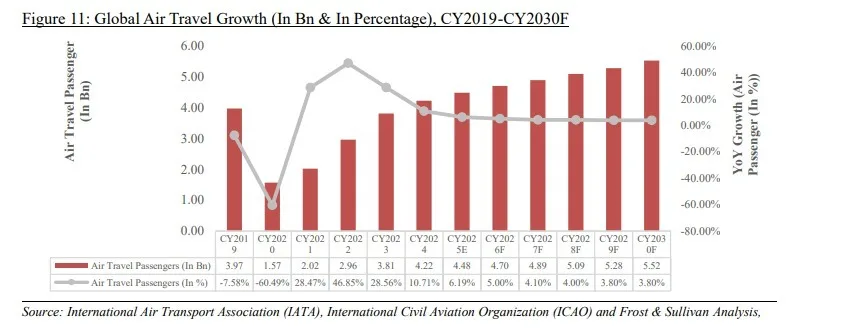
India’s commercial aerospace industry is entering a major expansion phase. Growing passenger traffic and airline fleet expansion are increasing demand for aircraft, components, engineering services and maintenance.
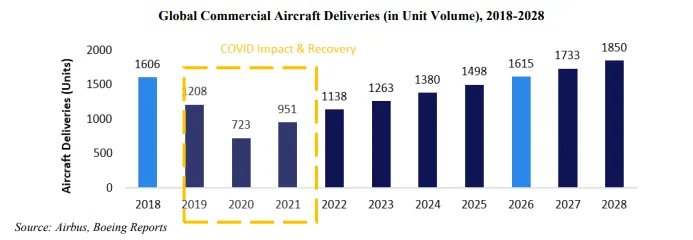
Global commercial aircraft deliveries are forecast to rise to about 1,850 by 2028.
Here are the key developments shaping the industry:
- A large aircraft order pipeline: As of July 2026, India had 2,056 aircraft on order, according to the Ministry of Civil Aviation. These orders point to substantial long-term demand for aerospace manufacturing, component suppliers, maintenance and technical services.
- A growing market for aircraft maintenance: According to Airbus’s January 2026 outlook, India’s commercial aircraft fleet could triple to 2,250 aircraft by 2035. The market for maintenance, repair and overhaul (MRO) of airframes, engines and components is also projected to reach US$9.5 billion by 2035. This creates potential opportunities for aerospace companies in India providing aircraft servicing, engine maintenance and replacement components.
- An opportunity to move up the value chain: Aerospace companies in India are involved in precision components, aerostructures, engineering and digital services. Expanding into more complex work could create opportunities for suppliers, although global aerospace manufacturing requires strict quality standards and lengthy qualification processes.
Aerospace Exports: Indian Suppliers Are Entering Global Supply Chains
Defence exports are only one part of the wider story. Commercial aerospace offers another route for Indian businesses to participate in international markets. Beyond defence, aerospace companies in India are supplying components and engineering services to global commercial aerospace manufacturers. Boeing’s official website reports 375+ Indian suppliers and over US$1.4 billion in annual sourcing from India. Aerospace and defence make up over 50% of the global precision tooling market, which is forecast to grow at about 16% a year in 2024-28.
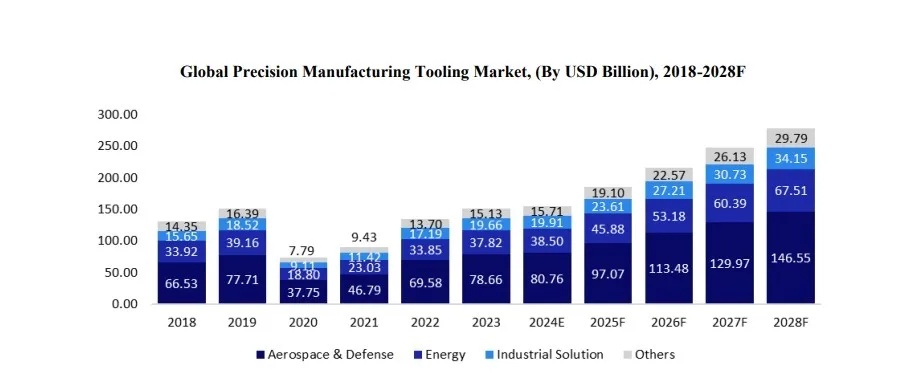
Defence exports: A 56-fold jump in 12 years. India’s defence exports rose from ₹686 crore in FY2013-14 to a record ₹38,424 crore in FY2025-26, growing 62.66% year-on-year.
The private sector contributed ₹17,353 crore (45.16%) of total defence exports in FY2025-26, while DPSUs accounted for ₹21,071 crore (54.84%). Export exposure varies across companies: Unimech Aerospace generates over 90% of its sales from exports, while aerospace and defence make up around one-third of Dynamatic Technologies’ revenue.
The Next Milestone: ₹50,000 Crore in Defence Exports
The government targets ₹50,000 crore in annual defence exports by 2029, around 30% above FY2025-26 exports of ₹38,424 crore. Achieving this will depend on securing international contracts, timely deliveries and global competitiveness.
Key Growth Drivers
Beyond rising air travel, a few structural changes are creating opportunities for aerospace companies in India.
Policy Support for Domestic MRO
The government has taken steps to make aircraft maintenance more competitive in India. In July 2024, it introduced a uniform 5% IGST rate on aircraft and aircraft engine parts, addressing earlier differences in tax rates.
A more streamlined tax structure can improve the operating environment for domestic MRO providers and encourage airlines to get more maintenance work done within India.
Demand for Skilled Aerospace Professionals
Airbus estimates that India will require around 35,000 pilots and 34,000 technicians by 2035 as its aviation industry expands.
This highlights the need for specialised training, technical services and skilled personnel to support aircraft operations and maintenance.
India’s aerospace opportunity is shaped not just by rising aircraft demand, but also by changes in how aircraft are manufactured, maintained and supplied. Four developments are particularly important.
Global Supply Chain Diversification
Aircraft manufacturers are looking to make supply chains more resilient by diversifying suppliers and manufacturing locations. This creates opportunities for aerospace companies in India that can meet international quality, cost and delivery requirements.
Growing Demand for Aftermarket Services
Aircraft are staying in service longer as manufacturers work through production backlogs. This increases the importance of engine maintenance, component repairs and spare parts. Deloitte, citing Aviation Week, projects global commercial aviation MRO demand to grow at a 3.2% CAGR between 2026 and 2035.
Digitalisation and Advanced Manufacturing
Technologies such as AI, digital twins and predictive maintenance are helping aerospace companies in India improve production planning, monitor component performance and identify potential faults earlier. These capabilities can improve efficiency and create opportunities for specialised engineering and technology providers.
Future Outlook
India’s commercial aerospace industry has room to expand, but the opportunity will depend on how effectively aerospace companies in India translate growing demand into aerospace manufacturing capacity, reliable deliveries and profitable operations.
- A larger aircraft market: Airbus projects India’s commercial aircraft fleet to reach 2,250 aircraft by 2035, up from around 850 in 2025. This could create long-term opportunities for aircraft suppliers, engineering firms and maintenance providers. Globally, annual commercial aircraft deliveries were forecast to rise from 1,263 in 2023 to about 1,850 by 2028, as Airbus and Boeing raise narrow-body production rates.
- Supply-chain opportunities, with execution risks: Global aircraft manufacturers face production backlogs and supplier-capacity constraints. Aerospace companies in India that can consistently meet stringent quality, cost and delivery requirements may be better positioned to win business. However, demand alone does not guarantee that suppliers can convert orders into revenue.
- Growing importance of maintenance and aftermarket services: As airlines operate larger fleets and keep aircraft in service longer, maintenance, engine servicing and component repairs are expected to remain important parts of the industry. Deloitte cites projected global commercial aviation MRO demand growth of 3.2% CAGR from 2026 to 2035.
- Technology will shape competitiveness: Digital tools, AI-assisted maintenance and advanced manufacturing can help aerospace companies in India improve productivity and reliability. Their value will depend on successful implementation, workforce capabilities and measurable operating improvements.
Aerospace Stocks in India: Companies in the StockEdge Aerospace Value Chain Theme
The Aerospace Value Chain Investment Theme on StockEdge is one way to explore aerospace stocks linked to India’s aerospace industry. Here are a few aerospace companies in India included in this theme.
1. Hindustan Aeronautics Ltd. (HAL)
Hindustan Aeronautics Ltd. (HAL) manufactures aircraft, helicopters, aero-engines and related systems, along with repair, overhaul and spare-parts services. Its key focus areas include delivering 240 AL-31FP engines for the Su-30MKI under a Ministry of Defence order worth over ₹26,000 crore and setting up a strategic metal bank with MIDHANI to secure critical raw materials. HAL has a Fundamental Score of 74/100, rated Strong, with profitability at 60/100, efficiency at 70/100 and growth at 63/100. Its key financial indicators include ROE of 23.98%, ROCE of 31.99%, ROA of 7.73%, EBITDA margin of 29.53% and net profit margin of 27.55%. Its P/E stands at 35.21 and dividend yield at 0.92%.
2. Bharat Forge Ltd.
Bharat Forge manufactures forged and machined aerospace components for aircraft engines, airframes and landing gear. It is expanding through partnerships with global companies, including Pratt & Whitney, Rolls-Royce, Liebherr-Aerospace and Embraer. Bharat Forge has a Fundamental Score of 70/100, rated Average, with Growth, Profitability and Efficiency each scoring 80/100 (Strong). Its key financial indicators include ROE of 11.58%, ROCE of 12.46%, ROA of 5.19%, EBITDA margin of 17.41% and net profit margin of 6.42%. Its P/E stands at 127.96, compared with the industry P/E of 79.70, making valuation an important factor to monitor.
3. Rossell Techsys Ltd.
Rossell Techsys Ltd. operates in the aerospace and defence value chain, manufacturing electrical wiring and interconnect systems (EWIS), electrical panel assemblies, electronic systems and automatic test solutions. It works with global aerospace and defence companies, including Boeing, Lockheed Martin, Honeywell and BAE Systems. Rossell Techsys has a Fundamental Score of 47/100, rated Average, with Profitability at 71/100 (Strong), Quality at 90/100, Efficiency at 22/100 (Weak), Solvency at 40/100 and Valuation at 10/100. Its key financial indicators include ROE of 15.18%, ROCE of 11.28%, ROA of 4.15%, EBITDA margin of 12.91% and net profit margin of 4.51%. Its P/E of 227.36, compared with the industry P/E of 47.07, makes valuation a key area to watch.
Conclusion
India’s aerospace industry offers opportunities across aircraft components, precision engineering, engine systems and maintenance services. As global manufacturers expand their supply chains and India’s aviation market grows, aerospace companies in India could play a larger role in the industry. However, the opportunity comes with challenges, including stringent quality standards, long production cycles and the need for continuous technological investment.
For investors, understanding the aerospace value chain is only the starting point. The next step is to evaluate each company’s financial strength, growth prospects, valuation and actual exposure to aerospace. StockEdge’s Aerospace Value Chain theme and Fundamental Scores offer a starting point for exploring these aerospace stocks and identifying the financial parameters that deserve a closer look. Ultimately, industry growth is worth tracking, but company fundamentals and valuations matter when investing in aerospace companies in India.
FAQs
1. What is the aerospace value chain?
The aerospace value chain covers all stages of aircraft production and operation, from raw materials and component manufacturing to aircraft assembly, engineering and maintenance.
2. Which are the main aerospace companies in India?
Key aerospace companies in India include Hindustan Aeronautics, Bharat Forge, Sansera Engineering, Azad Engineering and Sigma Advanced Systems, which operate in different parts of the aerospace manufacturing supply chain.
3. Why is Europe sourcing aerospace and defence parts from India?
India offers cost-competitive manufacturing, skilled engineering talent and an expanding supplier base. Aerospace companies in India that meet stringent global quality and certification standards can participate in international aerospace supply chains.
4. What government support is available to factories?
Support varies by activity and eligibility, but initiatives such as the Make in India programme, industrial manufacturing policies and aviation-related reforms aim to strengthen domestic manufacturing and supplier capabilities, including those of aerospace companies in India.